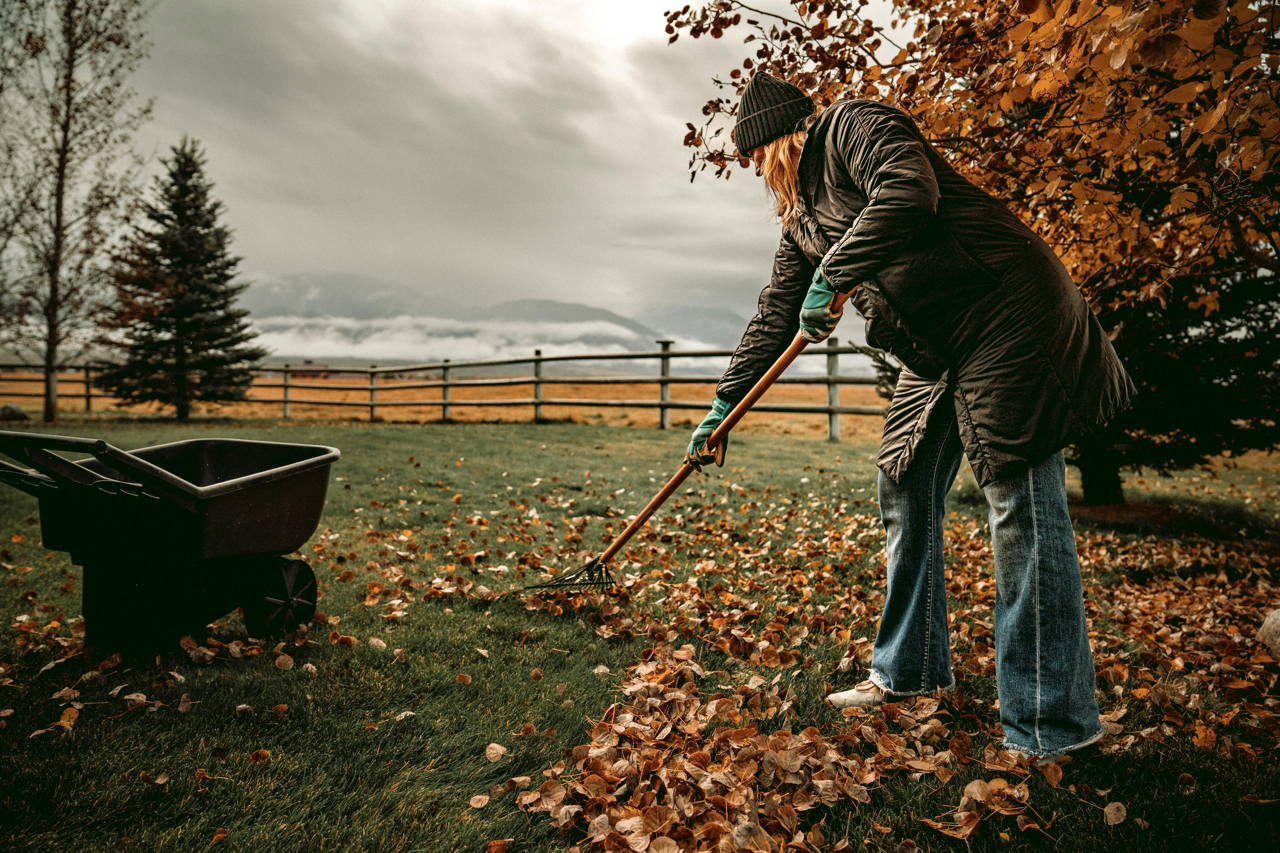
Your yard tells you when summer’s over before the calendar does. The grass slows down, leaves start piling up faster than you can keep after them, garden beds start looking tired, and a few mornings turn cold enough that you notice it in your hands before you notice it anywhere else.
None of that means winter’s here. It means the clock’s running on outdoor jobs that are a lot easier to knock out now than once the ground freezes.
Cleaning up before winter isn’t about making everything picture perfect. It’s about leaving your lawn, beds, and drainage in decent shape so the cold season doesn’t do more damage than it has to, and so spring starts with less to undo.
Your Fall Yard Cleanup Checklist
Before you start, here’s the rundown. Not every yard needs every step, so treat this as a checklist, not a mandate.
- Clear fallen leaves before they mat down and smother the grass (don’t forget to leave a pile out-of-site to help beneficial insects survive winter)
- Give the lawn its last mow or two while it’s still growing
- Clean up spent annuals, weeds, and diseased plant material in beds
- Prune selectively, not everything in sight
- Clear branches, brush, and any storm debris
- Clean gutters and drainage before the heavy fall rain arrives
- Mulch, compost, or haul away what’s left over
- Protect the vulnerable spots before the first hard freeze
Grab a rake, pruning tools, a few bags or bins, and gloves that fit the job in front of you. The right pair is the difference between finishing a task and finishing it with a handful of blisters and stuck splinters.
Clear the Leaves Before They Pile Up
Not every leaf needs to end up in a bag. How much work this is depends on volume and where the leaves land.
A thin, scattered layer on the lawn can usually be mowed right into the grass, where it breaks down and feeds the soil over winter. A thick, matted layer is a different story. It blocks light and traps moisture, and it can smother the grass underneath if you leave it. That’s the layer worth raking or bagging.
Leaves in planting beds are more forgiving. A light covering can protect perennials through the cold months, so beds don’t need to be cleaned as thoroughly as lawns.
Where leaves cause real trouble is on walkways, over drains, and anywhere they get wet and mat together. Wet leaves are heavier, slicker, and slower to break down, and they’re rougher on your hands too, since sticks and grit tend to hide underneath them.
If you’re doing a lot of raking and bagging, look for a glove with enough grip to hold a rake handle for an hour and enough dexterity to tie off a bag without taking the glove off first. It’s a small thing, but it’s the difference between a job that takes an afternoon and one that takes all weekend.
Give the Lawn Its Last Cuts
There’s no single date that works for every lawn. Cool-season grasses, common through the Northeast, Midwest, and Pacific Northwest, keep growing well into fall and often need mowing right up until growth actually stops. Warm-season grasses in the South slow down earlier and need less attention by comparison.
The general rule holds either way: keep mowing as long as the grass is actively growing, and don’t let it go into winter too long. Grass left too tall can mat down under snow or ice and invite disease. Grass cut too short right before cold weather stresses the roots at the worst possible time.
Mowing also handles a light leaf layer reasonably well, since a mulching mower can chop leaves fine enough to feed the lawn instead of smothering it. Heavier leaf drop should come off the lawn first, or the mower just pushes it around instead of managing it.
Clean Up Garden Beds
Garden beds take more thought than a blanket “cut it all down” approach. Spent annuals, weeds, and anything visibly diseased should come out, since disease can carry into next year if it overwinters in the bed. Healthy plant material is a different call. Some perennials and seed heads left standing over winter provide habitat and food for birds and beneficial insects, so clearing a bed down to dirt isn’t automatically the better move.
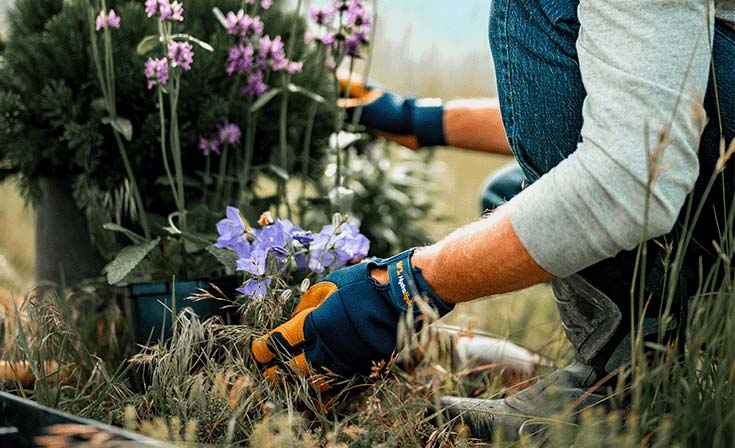
This is where the work gets hands-on: pulling weeds, digging out root systems, handling wet soil, and moving material in and out of beds. It’s steady contact with dirt, moisture, and rough stems, a different demand than raking a dry lawn.
If you’re in the beds for more than a few minutes at a stretch, a glove built for gardening earns its keep here, one with a snug enough fit to keep some dexterity while still holding up to dirt and moisture. Wells Lamont’s landscaping and garden gloves are built around exactly this kind of task.
Prune with a Plan
The question worth asking before any fall pruning is what actually needs it. Dead, damaged, or clearly hazardous branches are safe to remove any time. Beyond that, timing depends heavily on the plant. Many spring-flowering shrubs, such as lilacs, set next year’s buds in fall and pruning now can mean cutting off next year’s flowers. Save those to prune right after the spring blooming period.
To know what to prune in the Fall, check guidance for the specific plant rather than applying one rule to everything in the yard. It is also smart to write it down so you can reference your notes season to season.
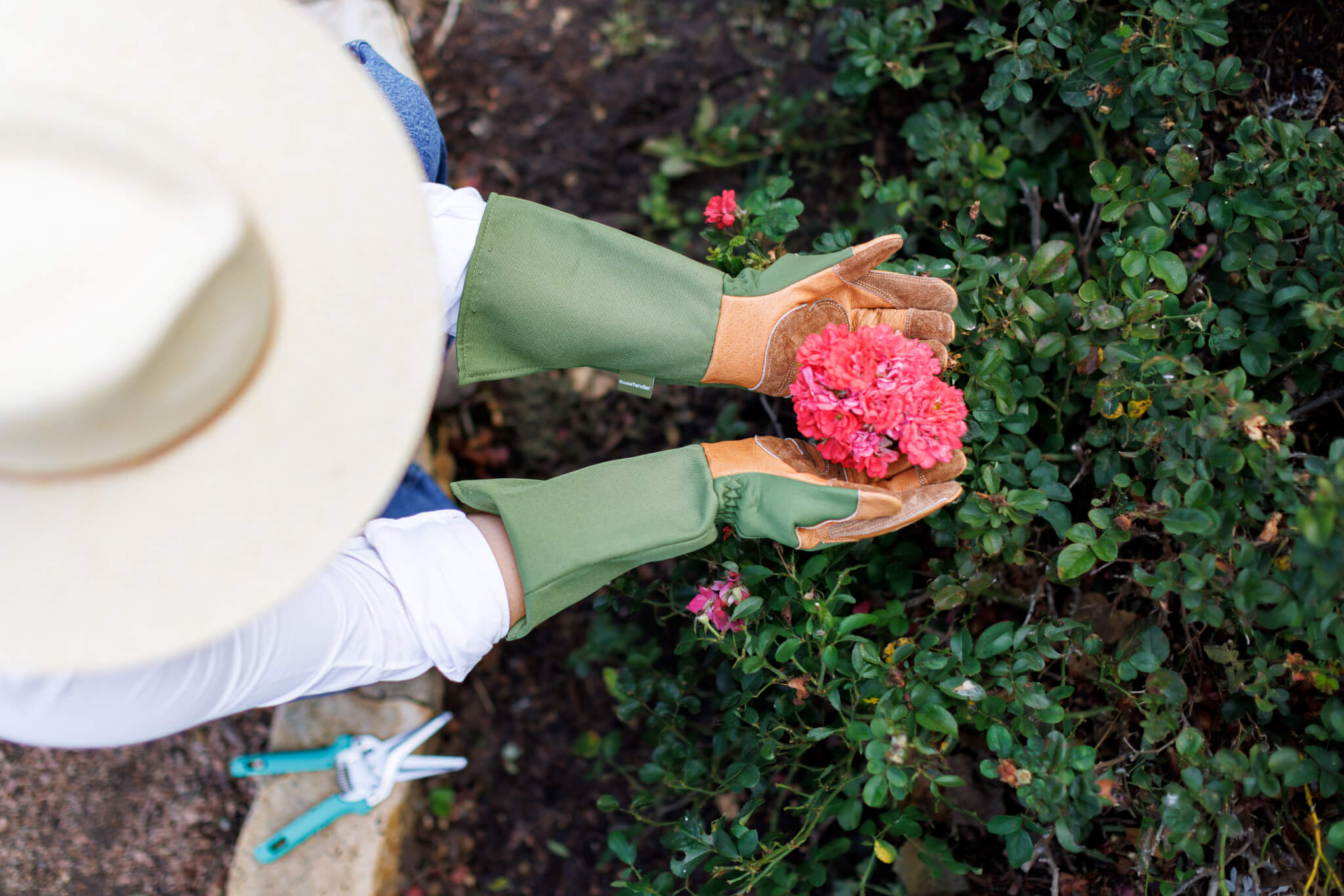
Once you know what to prune, then consider the type of protection your hands need. Roses, blackberry canes, and other thorny growth call for more coverage than a lightweight gardening glove offers, and thick or woody stems can be tougher on material than soil and mulch ever are. A heavier glove, built to handle abrasion and the occasional thorn without giving up grip, makes more sense here than the pair you used for weeding. Longer cuffs can also protect wrists and forearms from scratches.
Handle Branches, Brush, and Storm Debris
Fall cleanup isn’t always only leaves and pruning. Downed limbs, brush, pinecones, and whatever a fall storm knocked loose all need to come off the lawn and out of beds.
This is the roughest task on the list for your hands. Bark, splinters, and jagged breaks are common, and you’re usually gripping and dragging material. Large branches may need to be broken down with chainsaws and axes to split pieces into firewood. In this situation, Wells Lamont landscaping gloves, designed with specific features such as anti-vibration and impact protection, make a great choice..
There is another feature to consider when jobs requiref, rough handling rather than light garden work. Wells Lamont’s cut-resistant gloves, including the FX3® line, are built for this kind of task, not just for site or shop work.
Clear Gutters and Drainage
Leaves and debris in gutters and drains cause more damage than most homeowners expect. A clogged gutter can send water down the side of the house instead of away from it, and a blocked yard drain can leave standing water right where you don’t want it once the ground starts to freeze.
Before the heaviest fall rain hits, check and clear gutters, downspout exits, and any drainage channels or grates. Standing on a ladder is its own safety consideration, and no glove changes that, so keep the usual ladder precautions in mind regardless of what’s on your hands.
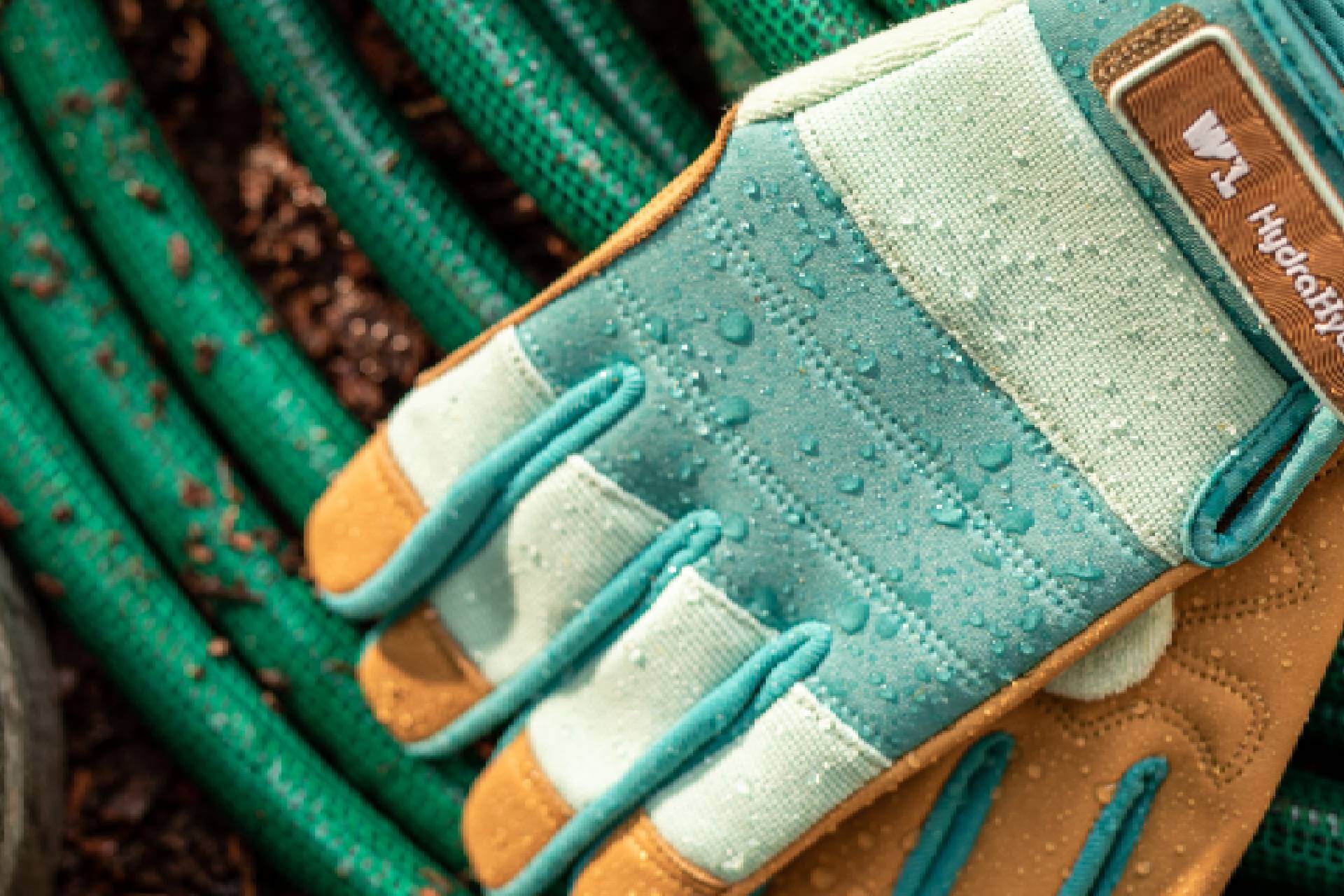
Gutter debris tends to be wet, slippery, and occasionally sharp where old shingle grit or metal edges are involved. A water-resistant glove with a secure grip matters most here. Wells Lamont’s HydraHyde® leather holds up well to this kind of wet, messy work without losing its grip.
Mulch, Compost, or Haul It Away
Not everything you clear out of the yard needs to leave the property. A simple framework helps: mulch what breaks down easily and benefits the soil, like shredded leaves and small clippings. Compost healthy plant material your system can handle. Haul away or dispose of anything diseased, invasive, or too woody to break down at home.
This is also where cleanup starts feeding next year’s yard instead of just clearing this year’s mess. Leaves mulched into beds insulate roots and add organic matter as they break down over winter.
Get Ready for the First Freeze
Once the bulk of the cleanup is done, the last stretch is about protecting what’s left. Disconnect and drain hoses before a hard freeze cracks the fittings. Bring in or cover anything that won’t survive sitting outside through a freeze, not only plants, but also any pots that could crack from exposure to the cold If certain plants or beds need extra protection over winter, this is the point to handle it, rather than after the first cold snap catches you off guard.
By this point in the season, you’re probably still finishing outdoor work on genuinely cold mornings, which are different conditions than a September yard clean-up.. The glove that worked fine for raking as the leaves started falling isn’t necessarily the one you want for an hour outside in late October or early November. If you’re still out there as temperatures drop, Wells Lamont’s cold weather gloves, several lined with Thinsulate™, are worth a look for the last stretch of the season.
Editorial note: once the winterizing-garden article is live, link it from this paragraph. “How to winterize your garden” pulls far more search volume than fits inside this piece, so it’s getting its own guide rather than a rushed section here.
What Changes Depending on Where You Live
There’s no single fall calendar that works nationwide. Frost dates, rainfall, and growing seasons vary enough that the same checklist plays out differently depending on where you live.
Northeast and Great Lakes region: expect heavy leaf drop and an earlier frost, which means front-loading leaf and lawn work rather than spreading it evenly through the season.
Southeast: Fall arrives later and lingers. Leaf drop and lawn work often stretch into November, and heavy rain makes drainage and gutter work more urgent than leaf cleanup.
Southwest and other desert climates: traditional leaf cleanup matters less, and irrigation adjustments and seasonal pruning take priority instead. A Northeast-style checklist doesn’t fit a yard that never had that many leaves to begin with.
Pacific Northwest: moisture is the defining factor. Wet leaves, slippery walkways, and gutters clogged by prolonged rain deserve more attention than they would somewhere drier.
Mountain West and higher elevations: freezes can arrive early and temperatures can swing hard within a single week, so finishing outdoor prep before the first hard freeze matters more than hitting a specific date on the calendar.
Match Your Gloves to the Job
If you only take one thing from this guide, take this: the right glove depends on the job, not the season alone.
| Task | What your hands deal with | What to look for |
| Raking and bagging leaves | Repetitive tool use, wet debris | Grip and dexterity |
| Weeding and bed work | Soil, moisture, stems | A snug, garden-ready fit with moisture-wicking and water-resistance |
| Pruning thorny growth | Thorns, woody stems | More coverage without losing grip, arm protection, and puncture-resistance |
| Branches, brush, storm debris | Bark, splinters, jagged breaks | Abrasion and puncture resistance |
| Gutters and wet cleanup | Wet, slippery, sometimes sharp debris | Water resistance and grip |
| Late-season cold mornings | Cold tools, dropping temperatures | Added warmth from brushed or fleece lining; insulation for very cold conditions |
A Little Work Now, an Easier Spring
A weekend or two of cleanup now protects your lawn and landscaping, cuts down on the mess waiting for you in spring, and catches drainage or damage problems while they’re still easy to fix.
Hard-working people, hard-working gloves since 1907. Whether you’re hauling wet leaves, clearing brush, or finishing yard work on a cold November morning, there’s a Wells Lamont glove built for it. Shop work and garden gloves.